

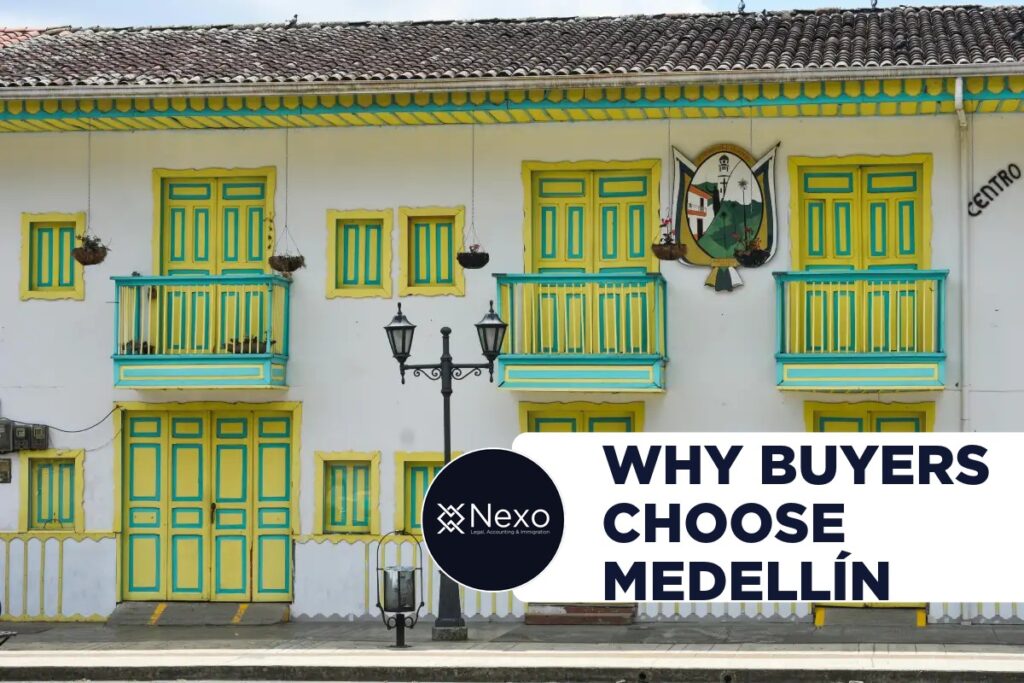
Why Foreign Buyers Are Choosing Medellín Over Other Colombian Cities in 2026
Quick answer: Foreign buyers keep choosing Medellín over Bogotá and Cartagena because it combines a stable climate, a mature expat and digital nomad infrastructure, and a legal and administrative system (stratification, notary networks, English-speaking service providers) that’s easier for a first-time foreign buyer to navigate. Bogotá offers higher rental yields and Cartagena offers stronger tourist-rental income, but both come with trade-offs Medellín doesn’t have.
Table of Contents
- The Three Cities Foreign Buyers Actually Compare
- Why Medellín Wins on Livability, Not Just Price
- The Legal Factor Nobody Mentions: Estratificación
- Rental Yields: What the Numbers Really Show
- Where Foreign Buyers Are Actually Buying in Medellín
- What Changes If the Peso Stays Strong
- Legal Risks That Are the Same No Matter Which City You Pick
- How to Decide: A Practical Framework
- FAQ
Why Foreign Buyers Choose Medellín Colombia 2026 Over the Rest
Almost every foreign buyer researching Colombian real estate ends up comparing the same three cities: Medellín, Bogotá, and Cartagena. Each has a genuinely different value proposition, and the “best” city depends more on what you’re optimizing for than on any single ranking.
| Factor | Medellín | Bogotá | Cartagena |
|---|---|---|---|
| Climate | Spring-like year-round (18–28°C) | Cooler, more variable | Hot, humid, tropical |
| Buyer profile | Digital nomads, retirees, remote workers | Investors, business owners | Vacation-home buyers, Airbnb investors |
| Expat infrastructure | Extensive (co-working, clinics, English-speaking services) | Growing, more corporate | Concentrated in the walled city |
| Rental demand | Strong long-term expat demand | Strongest long-term yields, corporate tenants | Strong short-term/tourist demand, seasonal |
| Legal complexity for buyers | Standard, well-documented process | Standard, more bureaucratic layers | Higher due diligence burden (colonial titles, heritage zoning) |
| Property tax exposure | Predictable via estratificación | Predictable via estratificación | Higher in tourist zones |
None of these cities is objectively “better.” What’s changed in 2026 is that Medellín has pulled ahead specifically among first-time foreign buyers — people who are choosing a city to live in and invest in at the same time, not purely chasing the highest yield.
Why Medellín Wins on Livability, Not Just Price
The most common mistake foreign buyers make is comparing cities purely on price per square meter. That comparison misses why most people are actually buying: they plan to live in the property, at least part of the year.
Climate is the starting point. Medellín sits in a valley at roughly 1,500 meters, which gives it a consistent temperature range close to 20°C year-round — no seasons to plan around, no extreme heat, no cold. Bogotá is cooler and greyer; Cartagena is tropical heat with high humidity most of the year. For a buyer relocating permanently, climate stops being a lifestyle preference and becomes a daily-life variable.
The expat ecosystem is mature, not emerging. Medellín has spent close to a decade building the infrastructure that supports long-term foreign residents: co-working spaces, private healthcare providers used to treating English-speaking patients, real estate agencies and law firms built specifically around foreign buyers, and an active community that makes the first year in the country meaningfully easier. Bogotá’s expat scene is real but more corporate and dispersed across a much larger city. Cartagena’s is smaller and concentrated almost entirely within the historic walled city and Bocagrande.
Safety perception has genuinely shifted. Medellín’s transformation over the last fifteen years is well documented, and by 2026 it’s no longer a talking point that needs defending — it’s simply part of why the city attracts as many long-term foreign residents as it does. That doesn’t mean due diligence stops mattering (see the legal risks section below), but the baseline safety concern that used to dominate every conversation about the city has largely faded from how foreign buyers evaluate it.
The Legal Factor Nobody Mentions: Estratificación
Generic real estate content compares cities on price and yield. What it almost never explains — because it requires understanding Colombian administrative law, not just the property market — is estratificación, and it’s one of the most important practical differences between Colombian cities for a foreign buyer.
Colombia classifies every residential property into one of six socioeconomic strata (estratos), from 1 (lowest) to 6 (highest), based on the physical characteristics of the property and its surroundings. This isn’t cosmetic — it directly determines:
- Public utility rates: higher-strata properties pay more for electricity, water, and gas, cross-subsidizing lower strata
- Predial (property tax) exposure: strata correlate closely with the cadastral value used to calculate annual property tax
- Eligibility for certain subsidies and programs: which don’t apply to foreign buyers directly, but affect resale value and tenant demographics
Most foreign buyers in Medellín end up in estrato 4, 5, or 6 neighborhoods (El Poblado, Laureles, Envigado), where utility and tax costs are meaningfully higher than in lower-strata areas — a variable that almost never appears in the yield calculations foreign buyers see in generic investment blogs. Before comparing a property in Medellín to one in Bogotá or Cartagena on price alone, factor in the estrato of each, because it changes your real, ongoing cost of ownership in ways the sale price doesn’t reflect.
Rental Yields: What the Numbers Really Show
Rental yield comparisons circulate constantly in real estate marketing content, and the general pattern holds across most recent market data: Bogotá tends to post the highest long-term rental yields of the three cities, Medellín follows closely with strong yields driven by sustained expat and digital nomad rental demand, and Cartagena’s long-term yields trail both — but its short-term/tourist rental income can outperform when occupancy is high.
What that comparison leaves out matters more than the numbers themselves:
- Bogotá’s higher yield comes with a larger, more bureaucratic city and a tenant pool that’s less expat-specific — you’re competing in a broader rental market, not a niche one.
- Cartagena’s tourist-rental income is seasonal and management-intensive. Short-term rental yields look attractive on paper but require active management or a local operator, and they’re more exposed to tourism downturns than long-term leases.
- Medellín’s yields are driven by a rental pool that keeps growing — remote workers, digital nomads on renewable visas, and long-term expats — which makes vacancy risk lower even if the headline yield number is a point or two below Bogotá’s.
If your priority is the highest number on a spreadsheet, Bogotá wins. If your priority is a property you can actually use part of the year, with dependable rental demand from a tenant pool that isn’t shrinking, Medellín’s numbers hold up better than they look on a simple yield comparison.
Where Foreign Buyers Are Actually Buying in Medellín
Within Medellín, foreign buyer demand concentrates heavily in a handful of neighborhoods, each with a different profile:
- El Poblado: the highest-demand, highest-price zone. Strongest short and long-term rental market for foreigners, highest estrato (mostly 5–6), highest property tax and utility exposure.
- Laureles: increasingly popular as an alternative to El Poblado — more local character, generally lower prices per square meter, still estrato 4–5, strong long-term rental demand from both locals and expats.
- Envigado: a separate municipality bordering Medellín, popular for buyers wanting a quieter, more residential feel while staying close to El Poblado.
- Sabaneta and La Estrella: lower price points, growing infrastructure, but a smaller established expat presence — better suited to buyers planning to live there long-term rather than rent short-term.
Each of these has different zoning rules, different building-age profiles (which affects structural due diligence), and different resale liquidity. A property that’s easy to resell in El Poblado can sit on the market significantly longer in a less-established zone.
What Changes If the Peso Stays Strong
The Colombian peso has strengthened noticeably against the dollar in 2026 — a trend we cover in detail in our guide to what a stronger peso means for your budget. That changes the calculus for foreign buyers in a way most real estate content hasn’t caught up to yet: the “cheap entry price” narrative that dominated Colombian real estate marketing for years is weaker in 2026 than it was in 2023 or 2024.
That doesn’t erase Medellín’s advantage — it shifts where the advantage comes from. With the currency discount smaller than it used to be, the practical, legal, and lifestyle factors covered in this article (climate, legal predictability, expat infrastructure, rental demand stability) carry more of the decision than the exchange rate alone. Buyers who were purely chasing a weak-peso discount have less reason to rush; buyers evaluating where they’ll actually build a life still have the same reasons to choose Medellín they had before.
Legal Risks That Are the Same No Matter Which City You Pick
Regardless of which of the three cities you choose, the core legal risks of buying property in Colombia as a foreigner don’t change:
- Verifying the certificado de tradición y libertad before signing anything
- Confirming the seller’s legal capacity to sell (succession issues, marital property regimes)
- Registering the purchase as foreign investment with Banco de la República
- Understanding closing costs — registration tax, notary fees, GMF — which apply the same way regardless of city
We cover the full closing-cost breakdown, the foreign investment registration process, and the most common legal risks foreign buyers face in our complete guide to buying property in Colombia as a foreigner. This article focuses specifically on choosing the city — that guide covers the transaction itself once you’ve decided where to buy.
How to Decide: A Practical Framework
Instead of ranking cities in the abstract, ask these questions in order:
- Will you actually live in the property, at least part-time? If yes, climate and expat infrastructure should outweigh yield differences of one or two percentage points. Medellín tends to win here.
- Is this a pure investment property you won’t visit often? If yes, Bogotá’s higher long-term yields and larger tenant pool deserve serious consideration.
- Are you comfortable managing a short-term rental, or hiring someone who will? If yes, and you value the vacation-property lifestyle, Cartagena’s tourist-rental income can outperform the other two — but budget for higher management involvement.
- What’s your realistic exit timeline? Liquidity (how fast you could resell) is generally strongest in El Poblado and comparable Bogotá zones, and weaker in emerging or lower-demand neighborhoods in any city.
When to Get Legal Advice Before Choosing
Talk to a Colombian real estate attorney before you commit to a city, not after you’ve already found a property you like. A short consultation can confirm the estrato and real tax exposure of a specific property, flag zoning or heritage restrictions (especially relevant in Cartagena’s historic center), and make sure the foreign investment registration and closing process is set up correctly from the start.
At Nexo Legal, we help foreign buyers evaluate properties across Medellín, Bogotá, and Cartagena — not just on price, but on the legal and administrative factors that determine your real cost of ownership. If you’re comparing cities before you start looking at listings, that’s exactly the right time to talk to us.
FAQ
Why do foreign buyers prefer Medellín over Bogotá or Cartagena?
Mainly climate, a mature expat and digital nomad infrastructure, and a legal/administrative environment that’s easier for first-time foreign buyers to navigate — not because Medellín offers the highest rental yield, which is usually Bogotá.
Does Bogotá really have higher rental yields than Medellín?
Generally yes, on long-term rental comparisons, though the gap is often within a percentage point or two, and Medellín’s tenant pool (expats, digital nomads) tends to be more stable.
What is estratificación and why does it matter for foreign buyers?
It’s Colombia’s six-tier system for classifying residential properties, which directly affects utility rates and property tax exposure. It matters because two similarly priced properties in different strata can have very different ongoing costs.
Is Cartagena a good option for foreign property buyers?
It can be, especially for buyers focused on short-term/tourist rental income and vacation-home use, but it comes with more seasonal income, higher management involvement, and more complex heritage/zoning due diligence in the historic center.
Does the stronger Colombian peso in 2026 change whether Medellín is a good investment?
It reduces the currency-driven “cheap entry price” advantage that existed in previous years, but it doesn’t change the lifestyle, legal, and rental-demand factors that make Medellín attractive — those matter more now than the exchange rate alone.
Which Medellín neighborhood is best for foreign buyers?
El Poblado has the strongest rental demand and liquidity but the highest prices and property tax exposure. Laureles and Envigado offer a lower cost of entry with still-solid demand. The right choice depends on whether you’re prioritizing rental income, resale liquidity, or a quieter place to live.
Nexo Legal helps foreign buyers evaluate properties across Medellín, Bogotá, and Cartagena on the legal and administrative factors that determine your real cost of ownership, not just the listing price. If you’re comparing cities before you start looking at listings, that’s the right time to talk to us.
Published: August 2026 — Nexo Legal
Sources: DANE — Estratificación Socioeconómica | Global Property Guide — Colombia Price History | Nexo Legal internal client data